|
After four months since planting, sheoaks and messmate growing straight and strong in Rowan Reid's tall tubes with a flexible post to cope with bouncing roos and grazing wallabies. The critters do push the sleeves up so need regular checking. The sleeves have proven too tight for spreading shrubs like the banksia.
1 Comment
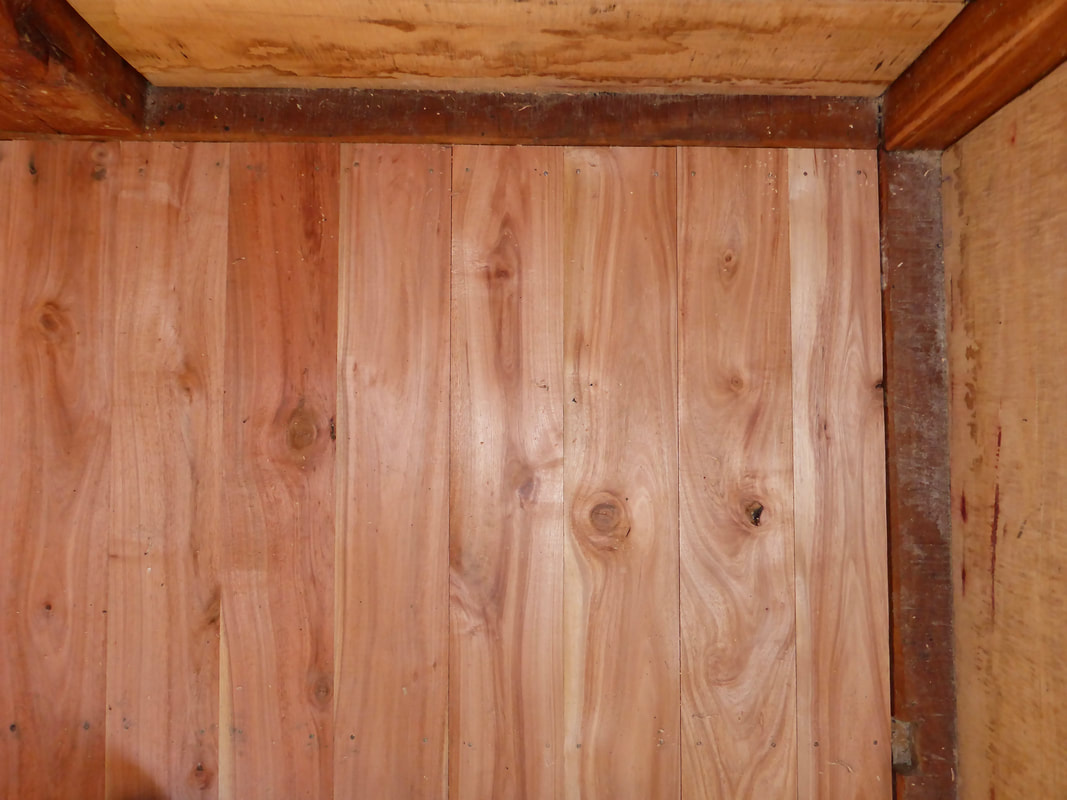
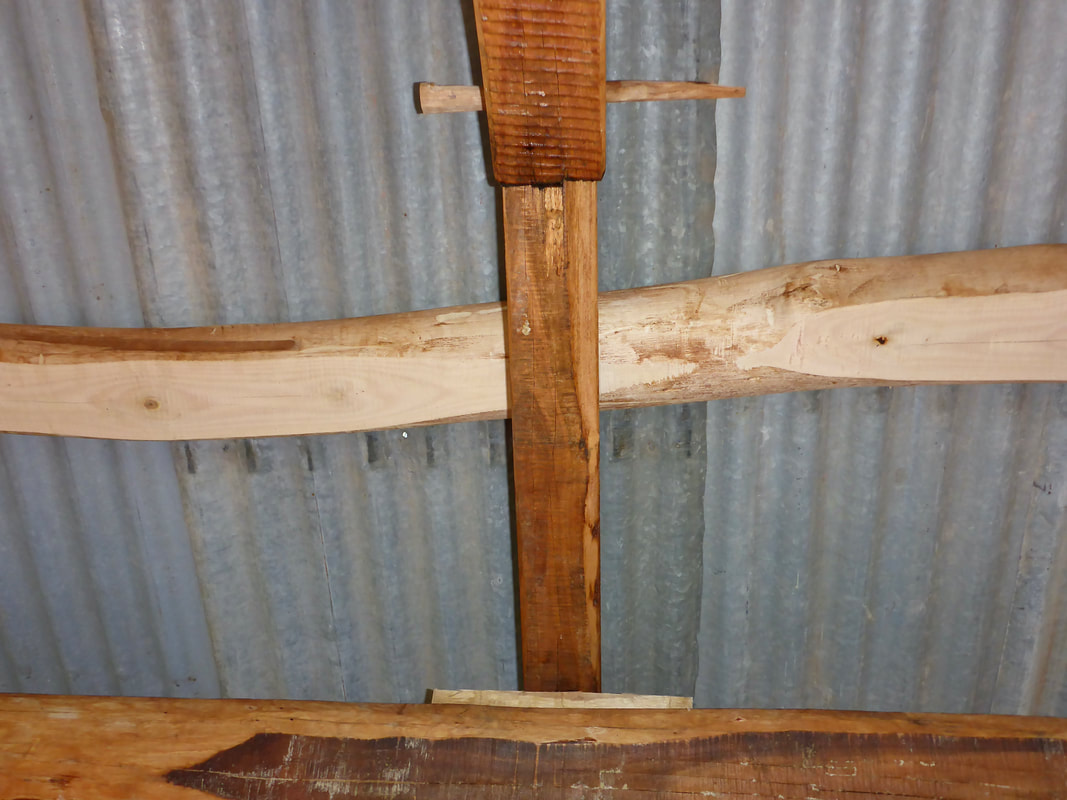
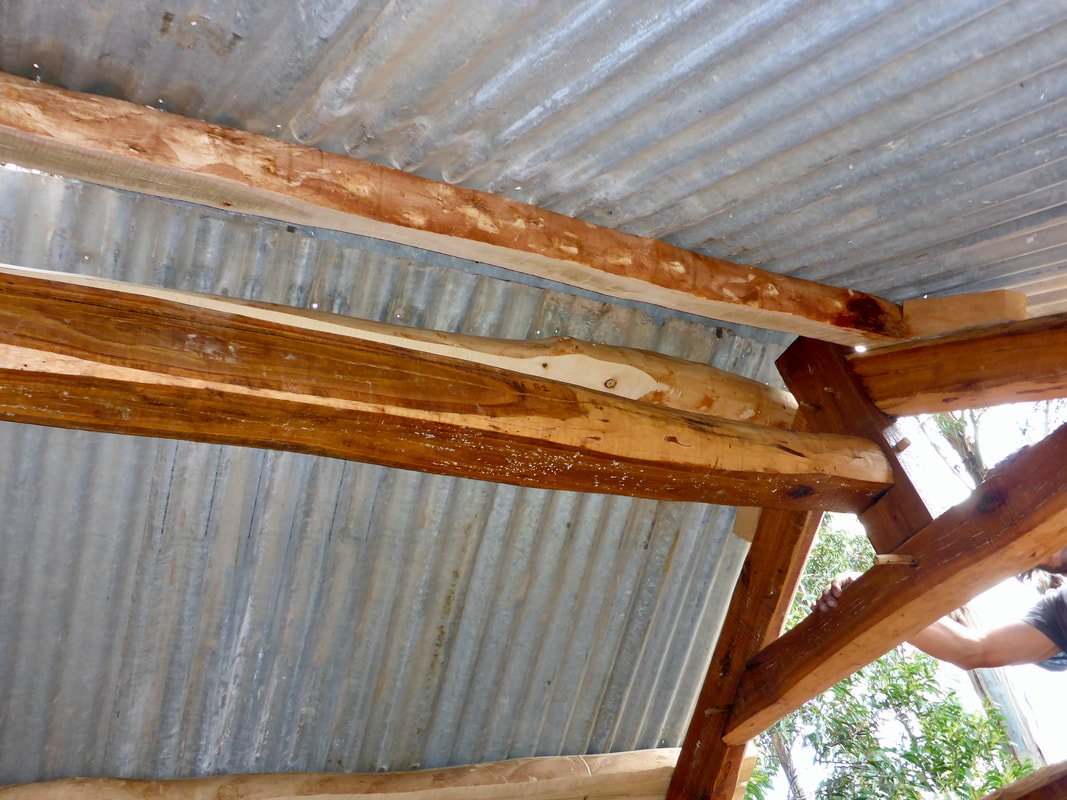
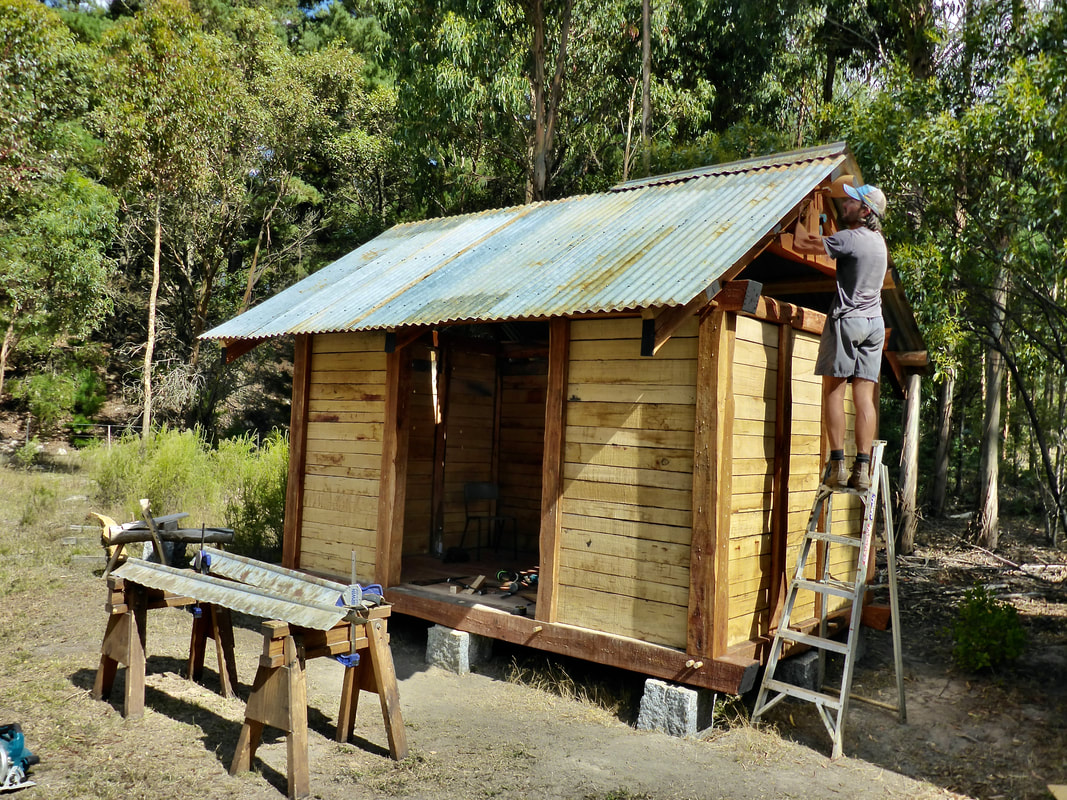
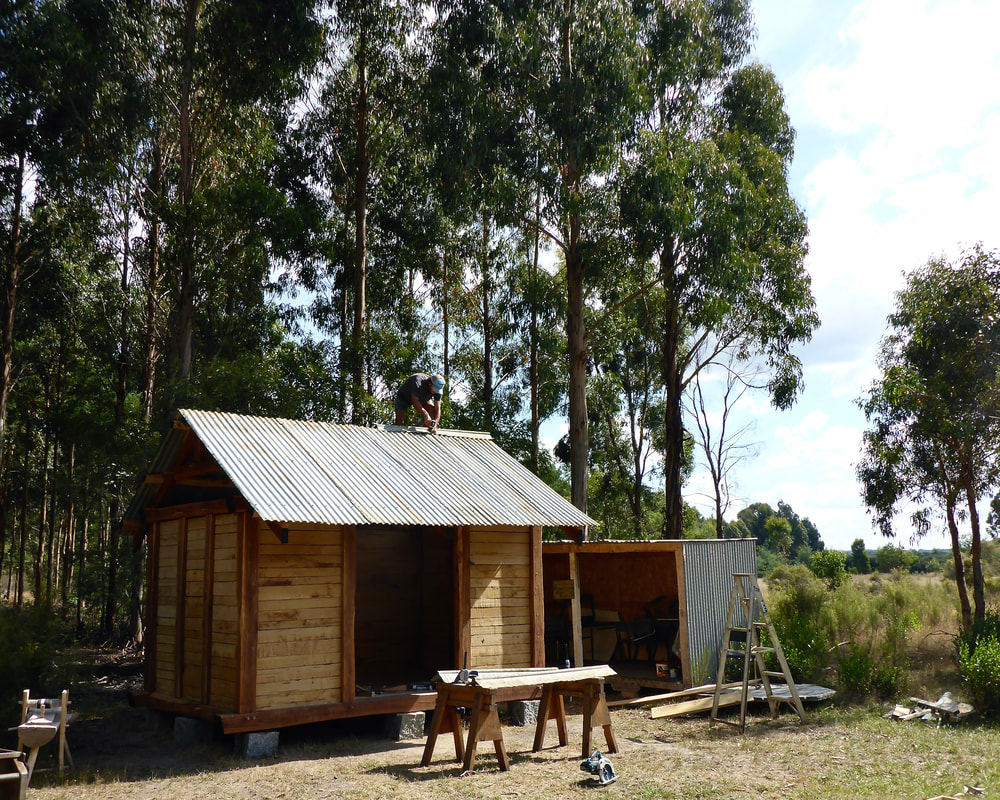
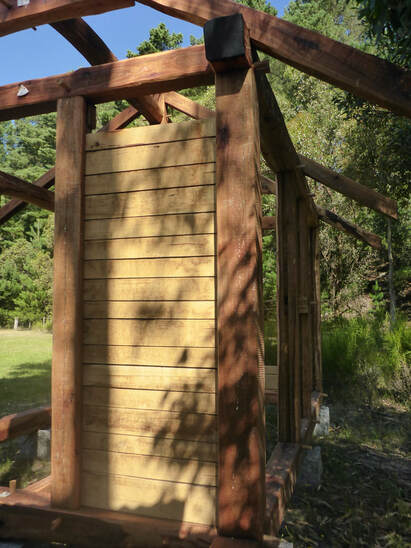
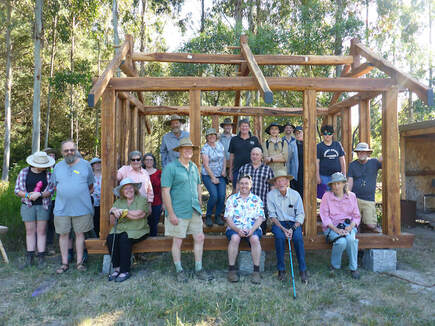
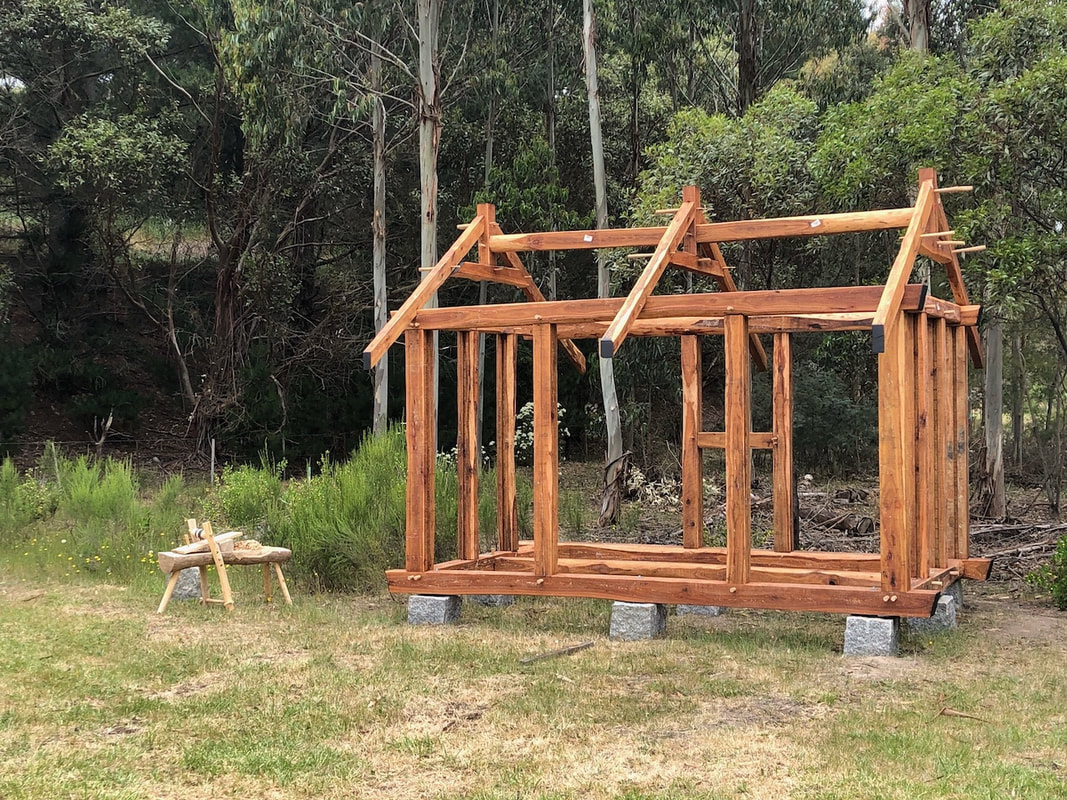
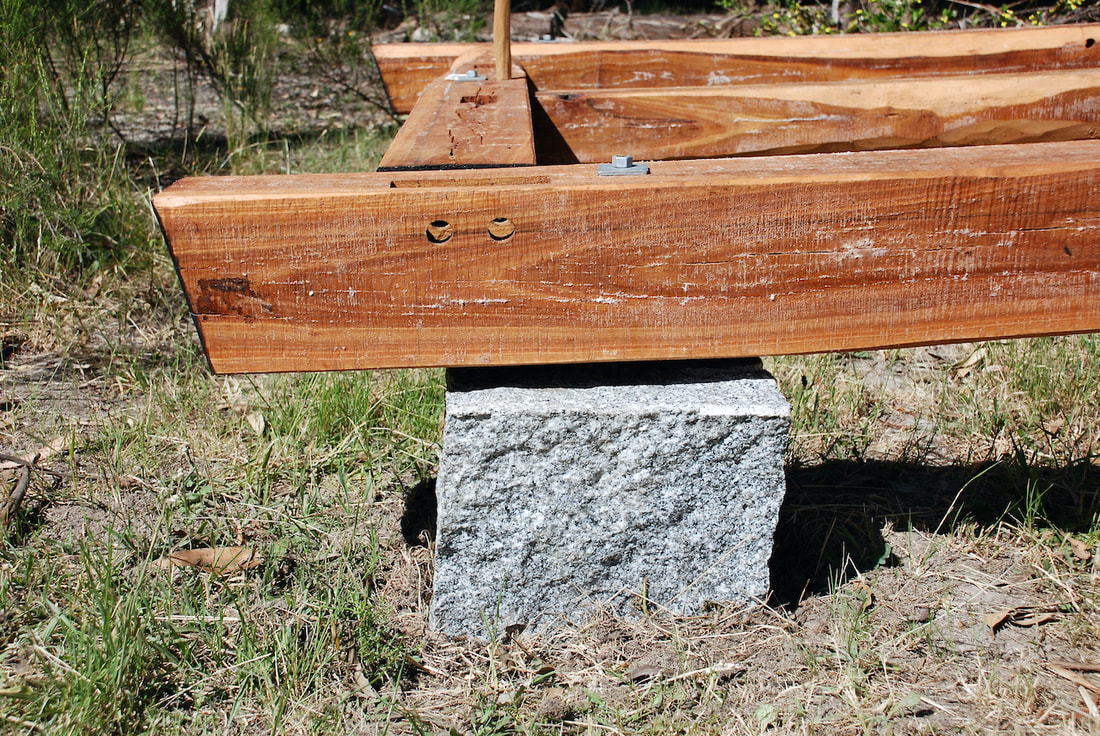
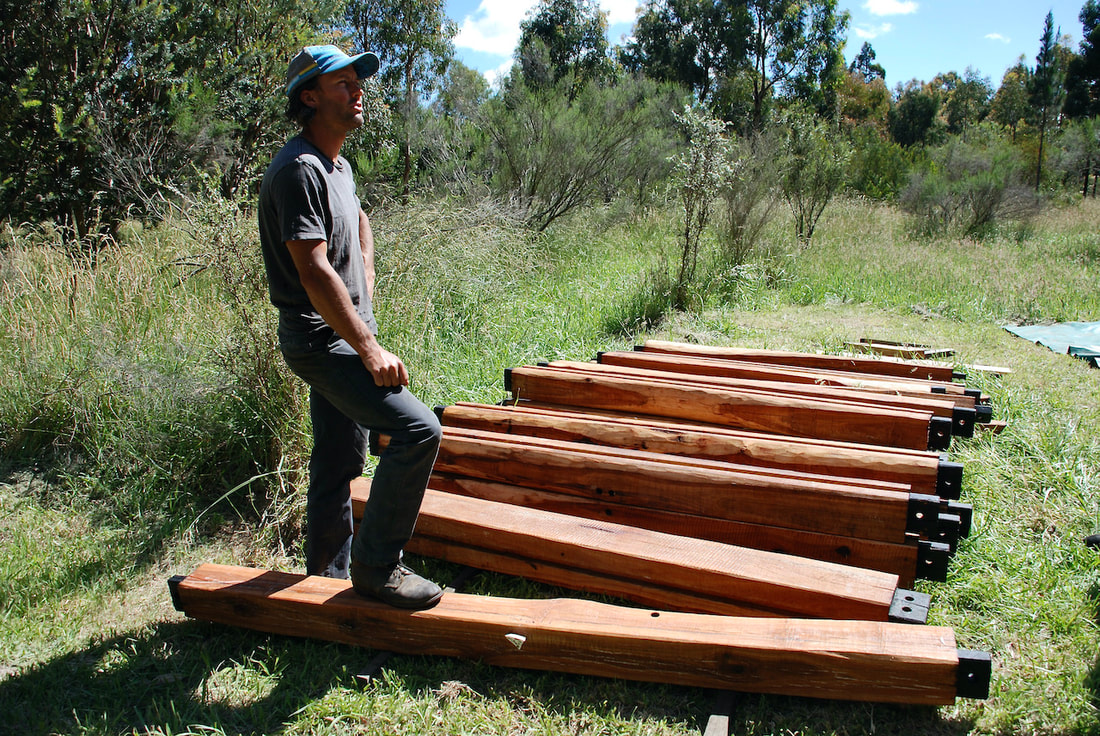
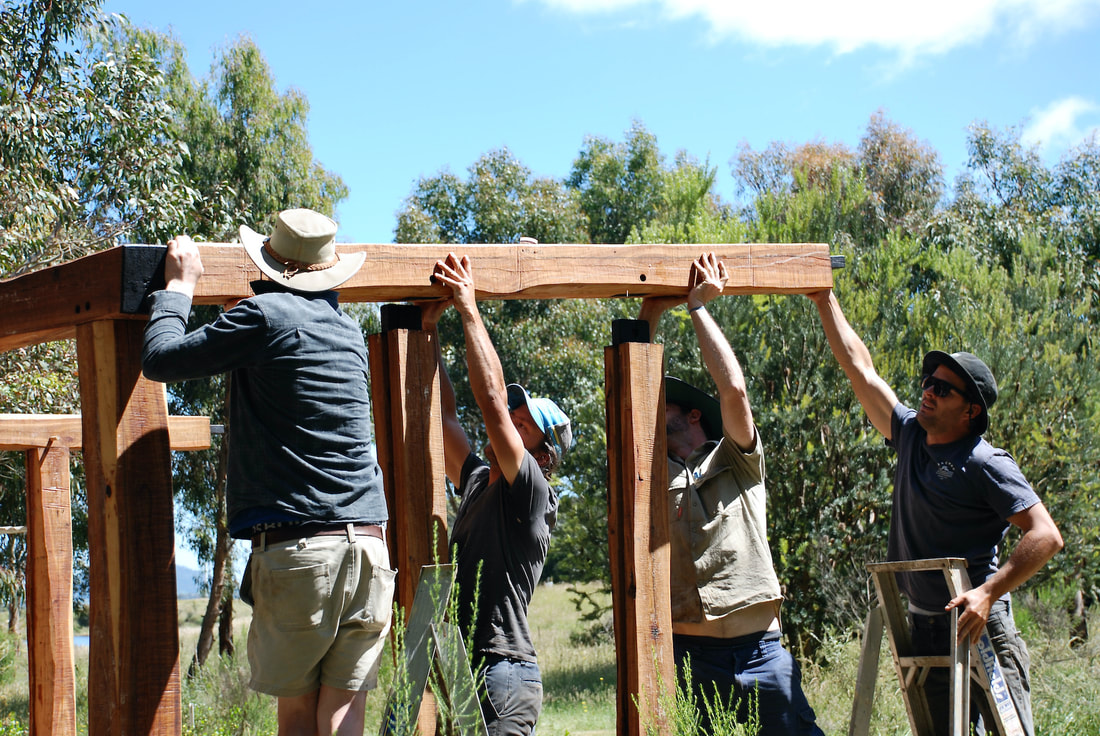
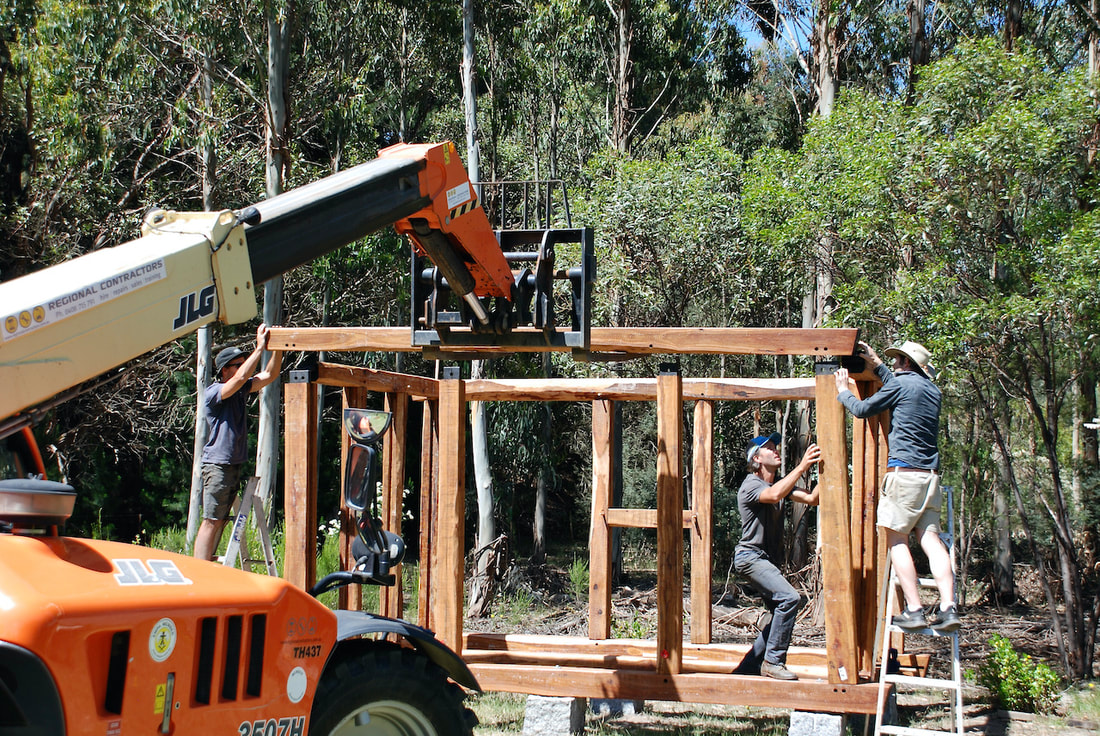
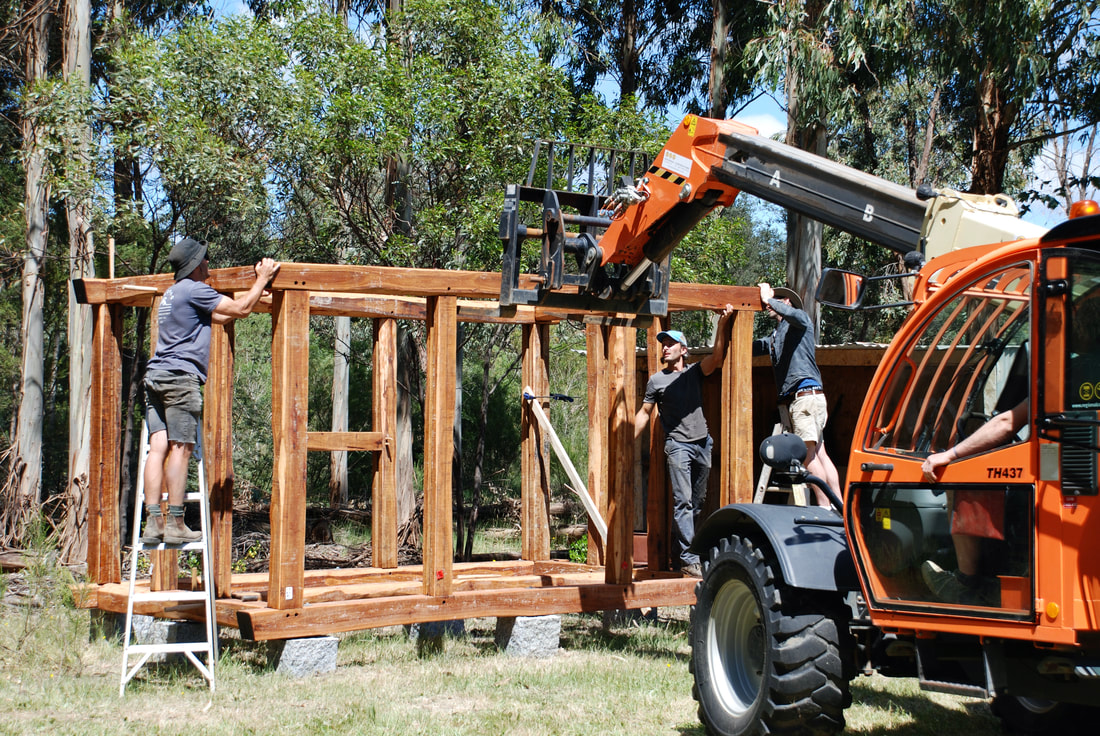
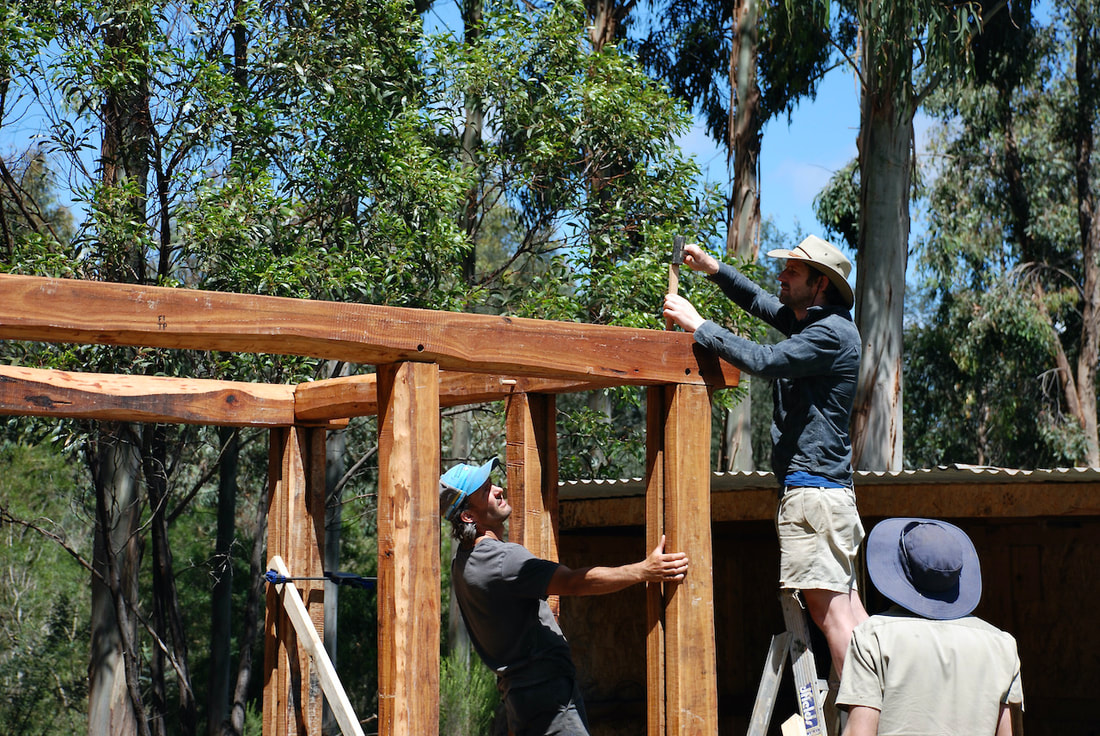
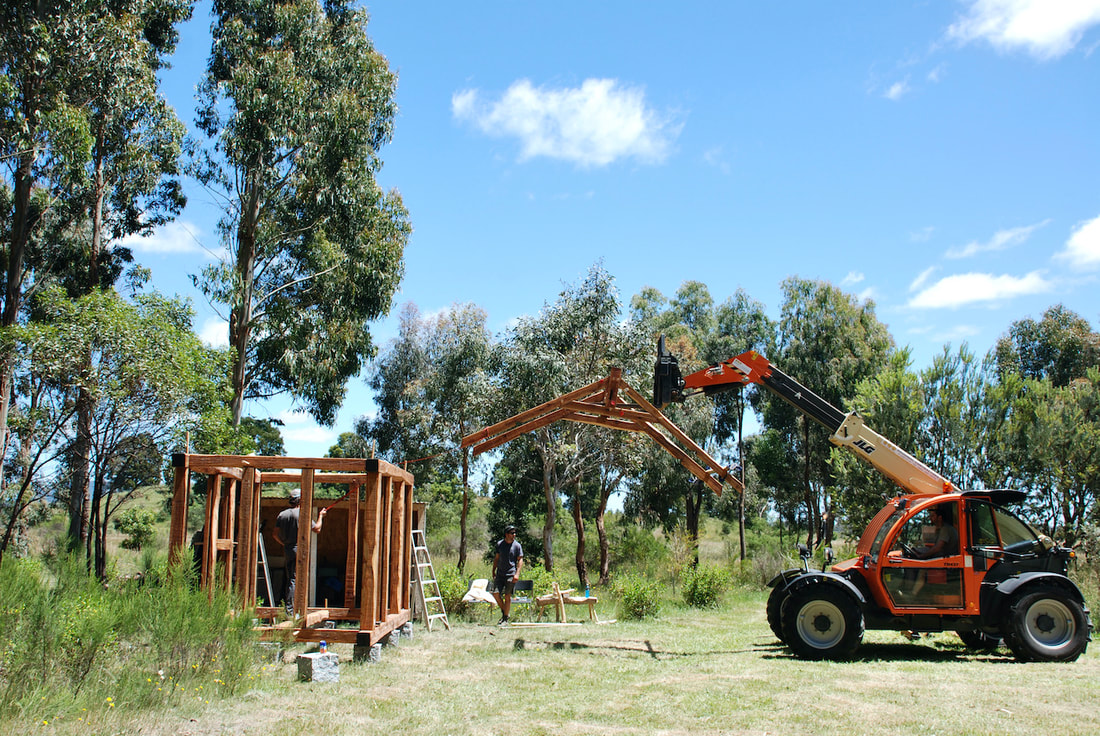
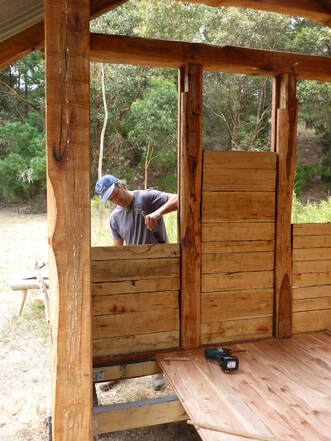
Lime render beneath the eaves and brass handles on the double doors were the final touches added by Lachie. Below is a gallery of images of the completed 21C drop slab hut.
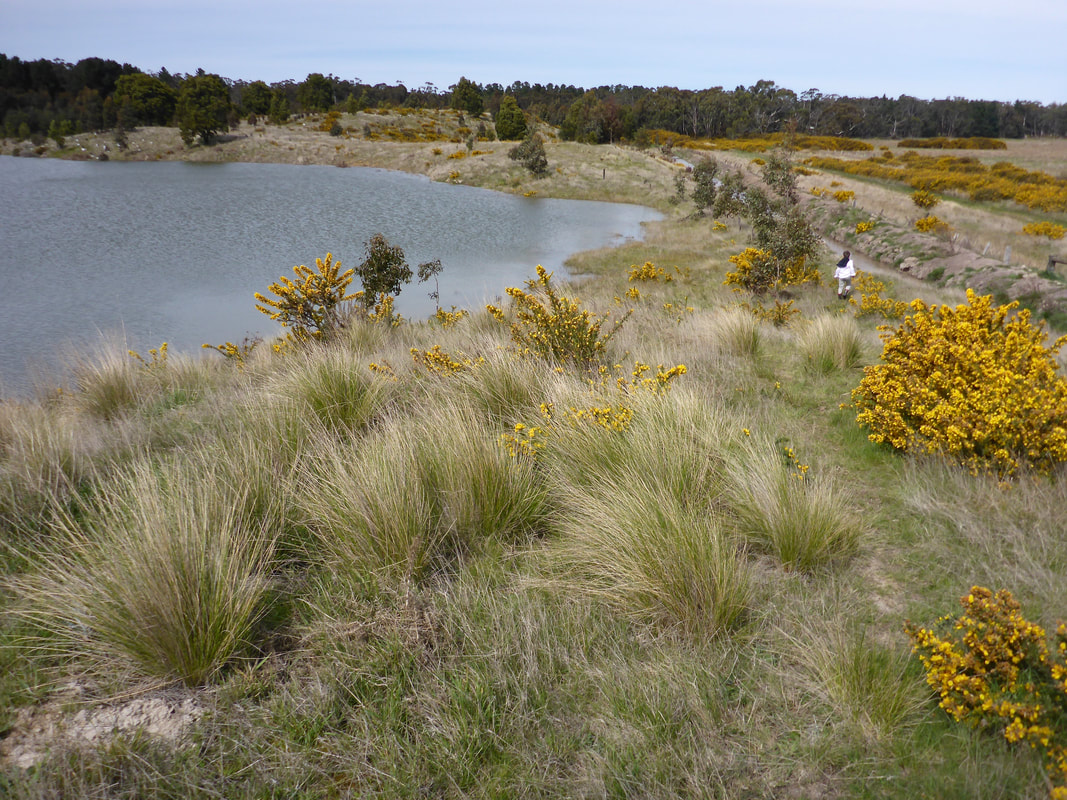
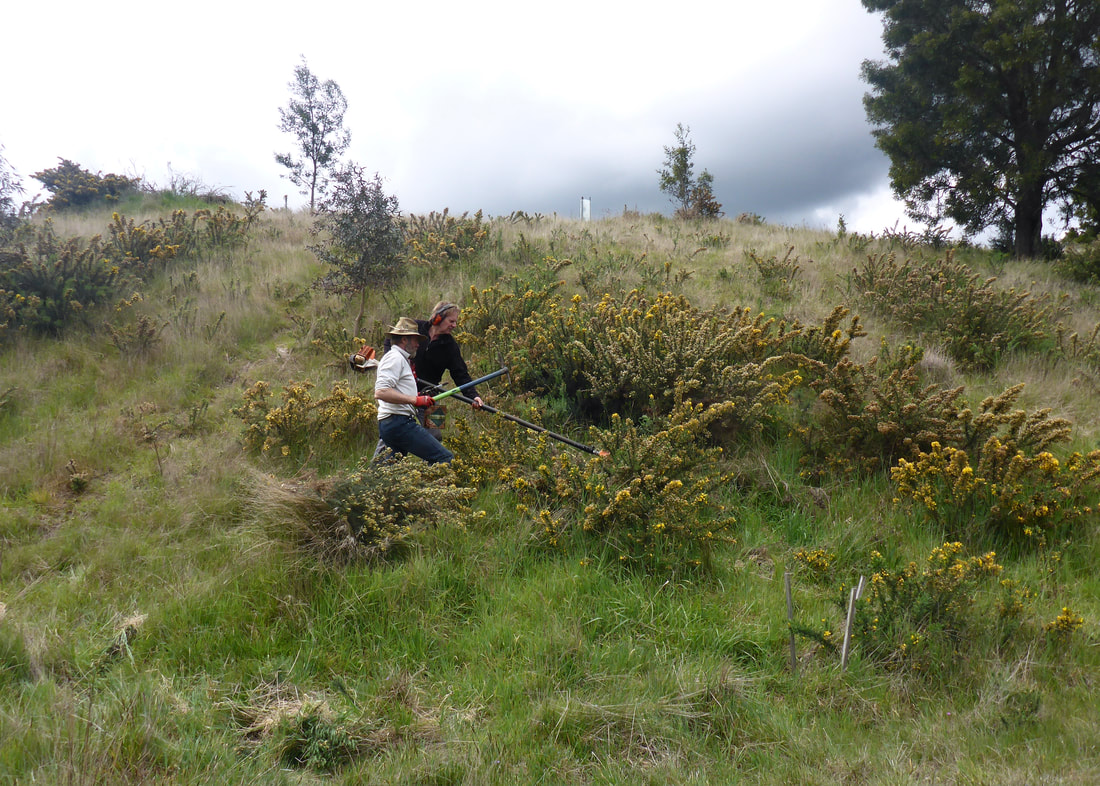
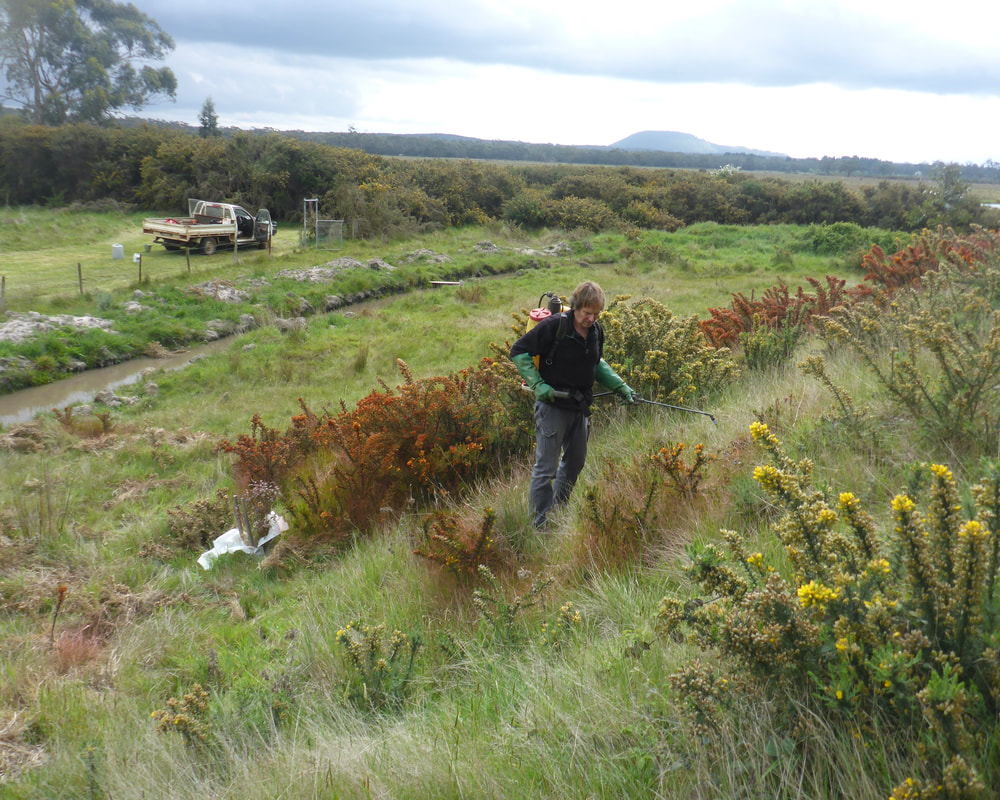
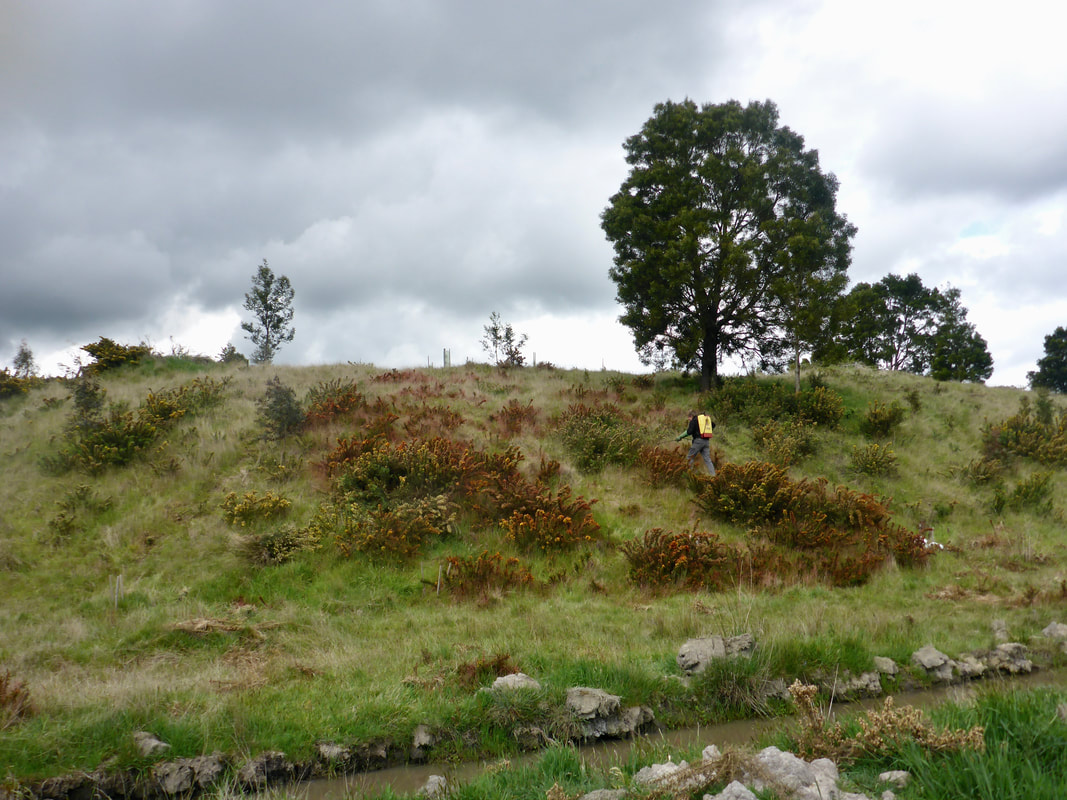
Annual spraying of gorse on the mullock heap top. Hakea decurrens still going strong (middle). Last of the black wattle going in (bottom). Not much gorse left to spray in ImLal South. Spot the echidna trying to hide. She roams around the west end of ImLal South, but we hadn't seen her for a while, so it was a pleasure to re-encounter her during the spring bird survey.
We topped up patches around the southern 5ha of the biorich plantation after the spring bird survey – with 40 black wattle, 20 silver banksia and 20 messmate stringybark.
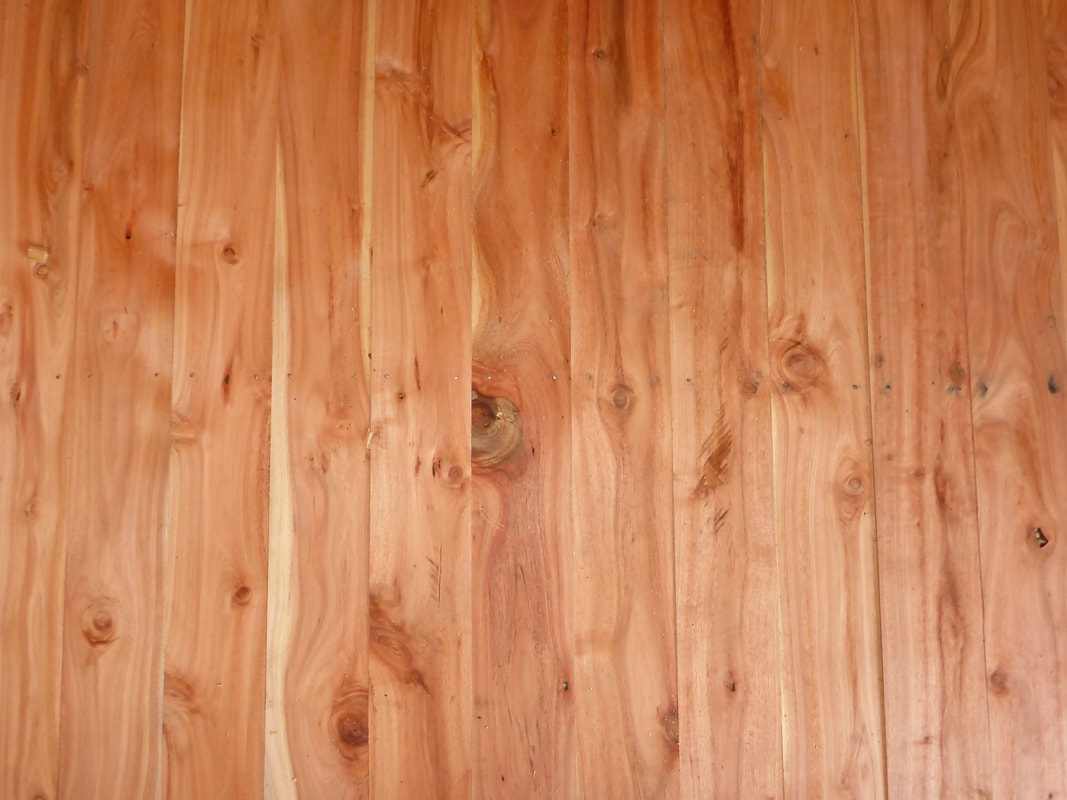
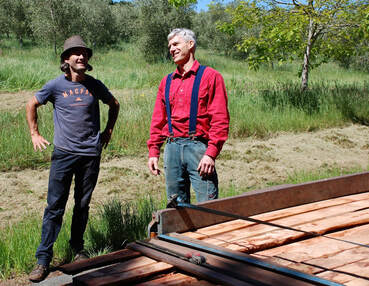
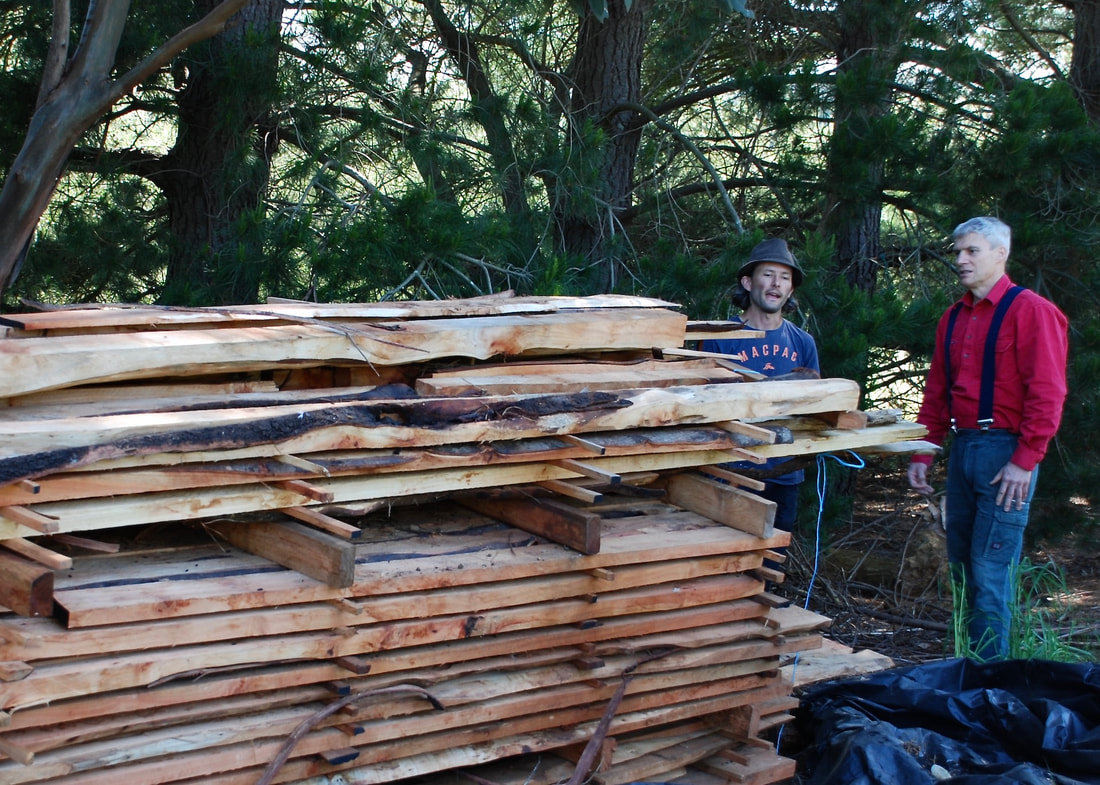
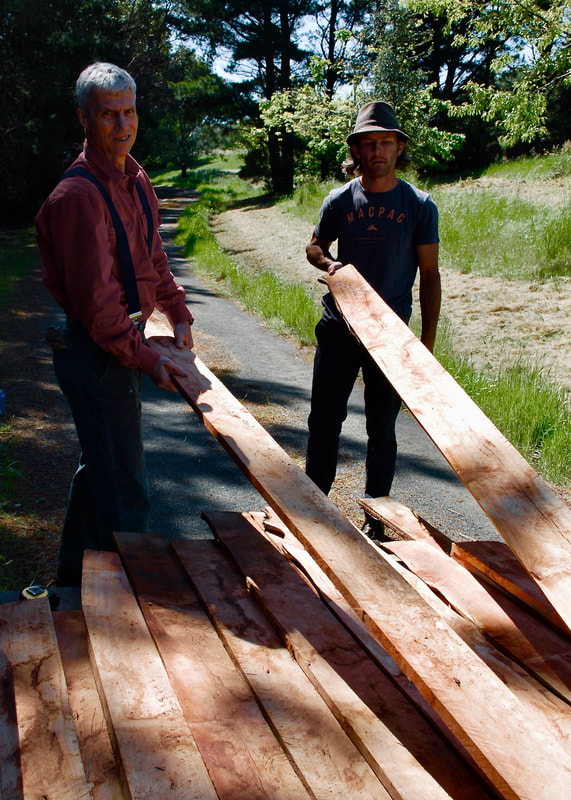
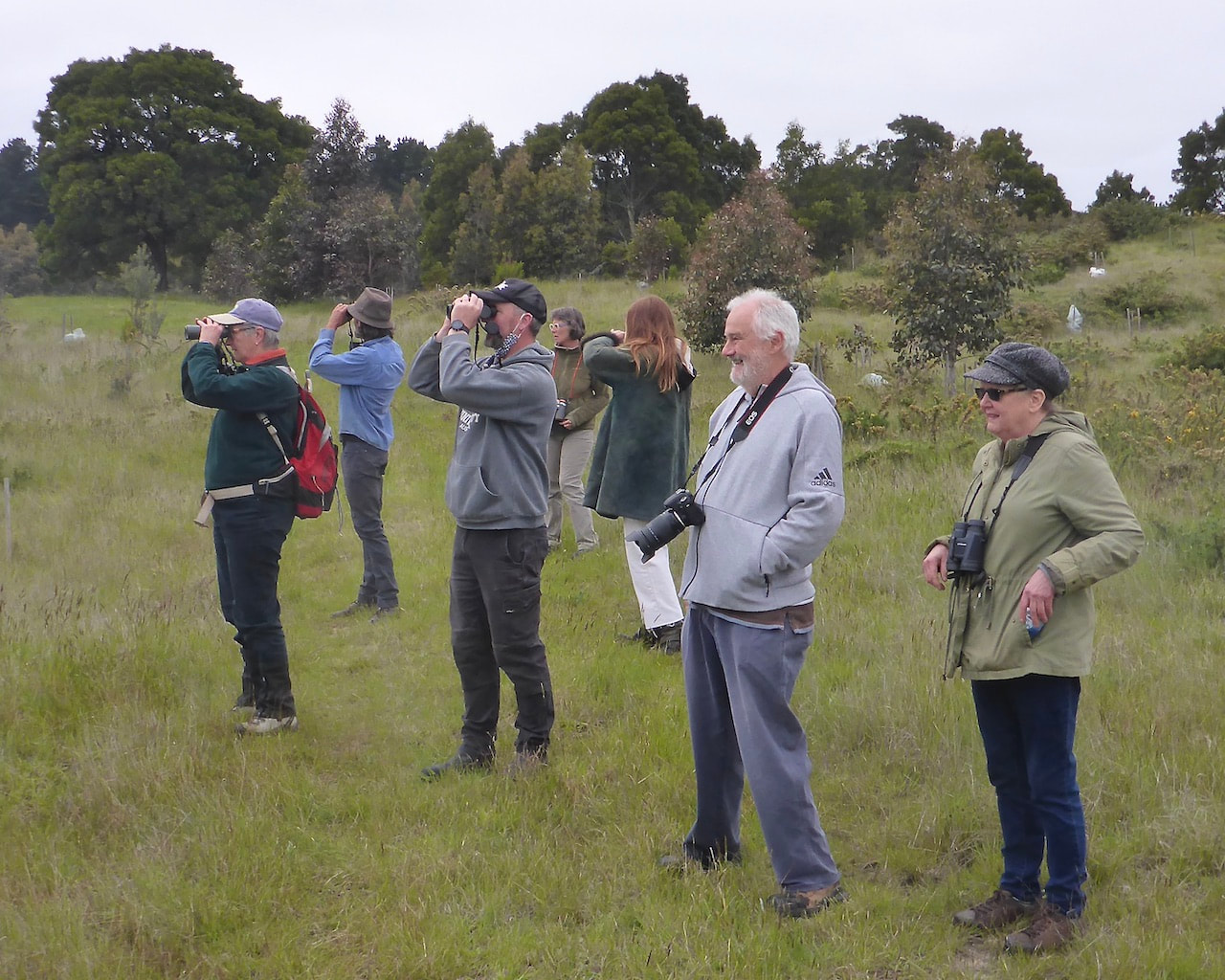
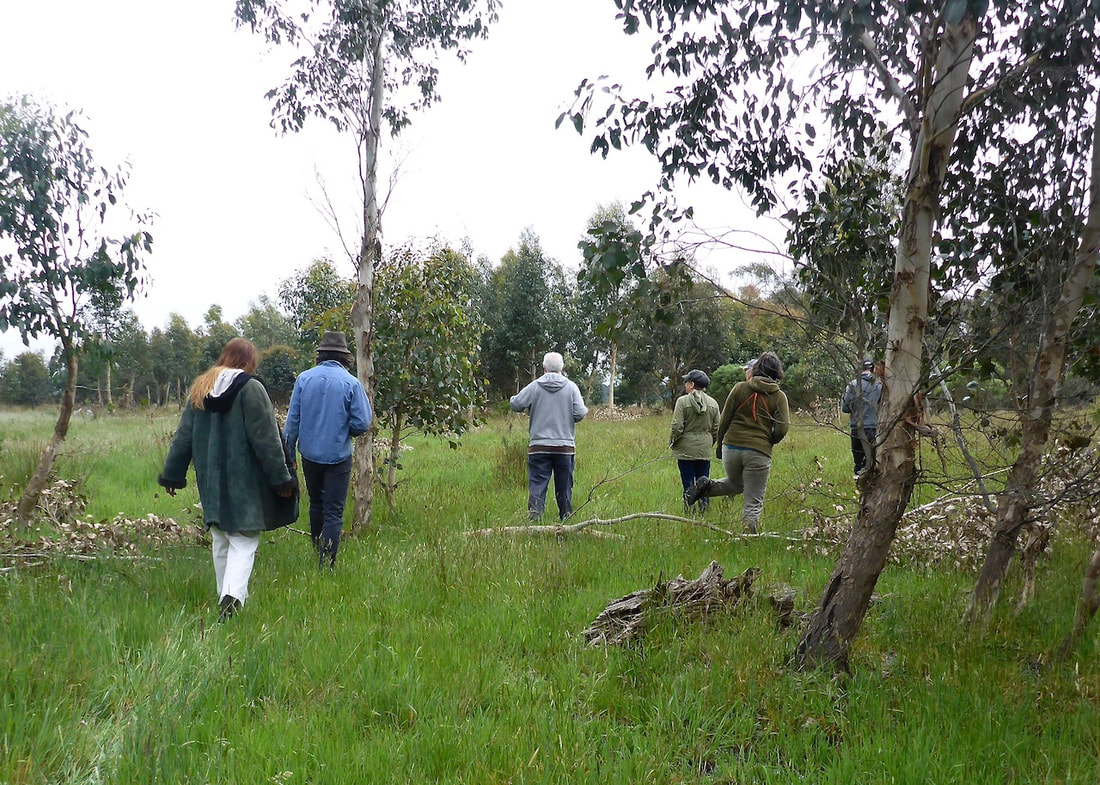
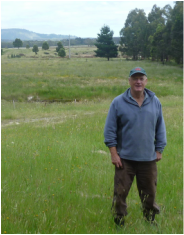
Gary had sprayed the grass twice with glyphosate and marked the various locations for planting. The long sleeves and the bendy fibreglass poles were purchased from Rowan Reid and are designed to deter bouncing roos and grazing wallabies. Hopefully, the sleeves are not too narrow for the banksia's spreading form. The ground was saturated, with water pooling after being dug into in a few spots. Will the tubestock drown? Like the long sleeves, yet another real life experiment. The black wattle and messmate are both timber species used in our 21C drop slab hut. The silver banksia is a locally endangered species that seems to thrive at ImLal. We hope to establish a seed orchard for the silver banksia (Banksia marginata) with Seeding Victoria. We ended the morning's events with a barbecue in the clearing next to the newly completed 21C drop slab hut. No doubt, the first of many such enjoyable occasions. Tanya Loos (on right) with BRT President, Gary Featherston. Seven of us took part in the spring bird survey led by ornithologist Tanya Loos. As enthusiastic and competent as ever. It was a still cloudy day with a couple of serious birders joining us. While only 33 species were recorded, these were present in large numbers, such as sighting of seven or more yellow faced honeyeaters – the first-ever species we recorded at ImLal. The plant growth this year has been truly remarkable, with even the shrubs now towering above us. One pronounced change was the dieback of the silver wattle, under serious attack from a mite. It's been a very wet spring and there was a lot of water laying about. Indigenous village of domed huts, sketched SW Victoria, late 1830s. Wattle and daub the English call it, but we decided to draw on a cultural heritage that pre-dates our recent colonial layer. We’re going way back beyond the miner’s bark hut and the cattlemen’s drop slab hut. Back to the weatherproofing method applied for millennia to the sturdy beehive domes built by Indigenous people in what is now southwest Victoria. While the English brought the technique with them, let’s not give them the credit for its invention. Wattle and daub is simply ye old English for the stick and mud rendering used worldwide for filling the gaps in huts placed on plains and peaks wherever the weather was cold and wild, and the wind whistling through walls constituted an existential threat. Back in the motherland, the English wattle was a small flexible stick, often from a willow, cut green to ensure suppleness. In Australia, the word wattle became applied to the ideally suited, abundant Acacia species throughout our golden plains. To daub is to smear with mud or any soft, adhesive matter. Extra ingredients for ensuring a gluey mud mix consisted of grass for boosting structural strength and manure for added sticking power. So, in keeping with our place-based approach, Lachie and I looked around at what resources we had on-site within the biorich plantation. Swathes of young, invasive silver wattle sprouted within sight of the 21C drop slab hut’s clearing. For the sticky daub, Lachie pointed out we need look no further than the banks of the central dam, once a white clay kaolin quarry. Grass grew and kangaroo dung lay about – both in abundance. Through experiment, Lachie discovered how thin, straight wattle branches, with the knobs trimmed off, could be woven into a lattice at the gable ends, under the eaves. The thinner the better as they’re more flexible and allow a tighter weave. Clay and grass were trampled together with a generous dose of kangaroo dung. The resultant dark muddy mess had the consistency of play dough and was easily squeezed by hand throughout the lattice weave. As it dries, you can expect the daub to crack. For impenetrability and a smooth, flexible finish, Lachie applied a lime render, the formula for which is one part lime putty, three parts sand and chopped fine straw. The putty is made by soaking hydrated lime for 24 hours. Two coats of render were applied by trowel to the lightly dampened daub, then finished off with a lime putty wash, diluted to the consistency of milk and brushed on. In 1841, prior to settlement, Chief Aboriginal Protector, George Augustus Robinson, encountered a native village of 13 dome-shaped huts at Mt Napier made of arched tree limbs with small limbs, turf, grass and bark filling the intermediate spaces so it was proof against wind and rain. These were no flimsy mia-mias or humpies. He recorded they were “sufficiently strong for a man on horseback to ride over.” Other settlers in the southwest also noted seeing substantial huts over 2m in height and 3-5m wide – large enough to comfortably house a family. It would seem fitting that in this, the final step, we were able to hark back to a deeper cultural heritage than our immediate colonial past. Western civilisation, then and now, is hardly the apogee of sustainable ideals. We have much still to learn if we are ever – like the First Nations – to become custodians of the land to which we belong. For all ten Steps, visit – https://www.biorichplantations.com/blog/category/21c-drop-slab-hut The hut is now protected from winter winds and driving rain. Lachie has installed sliding double doors, a casement window and applied four protective coats of a natural oil.
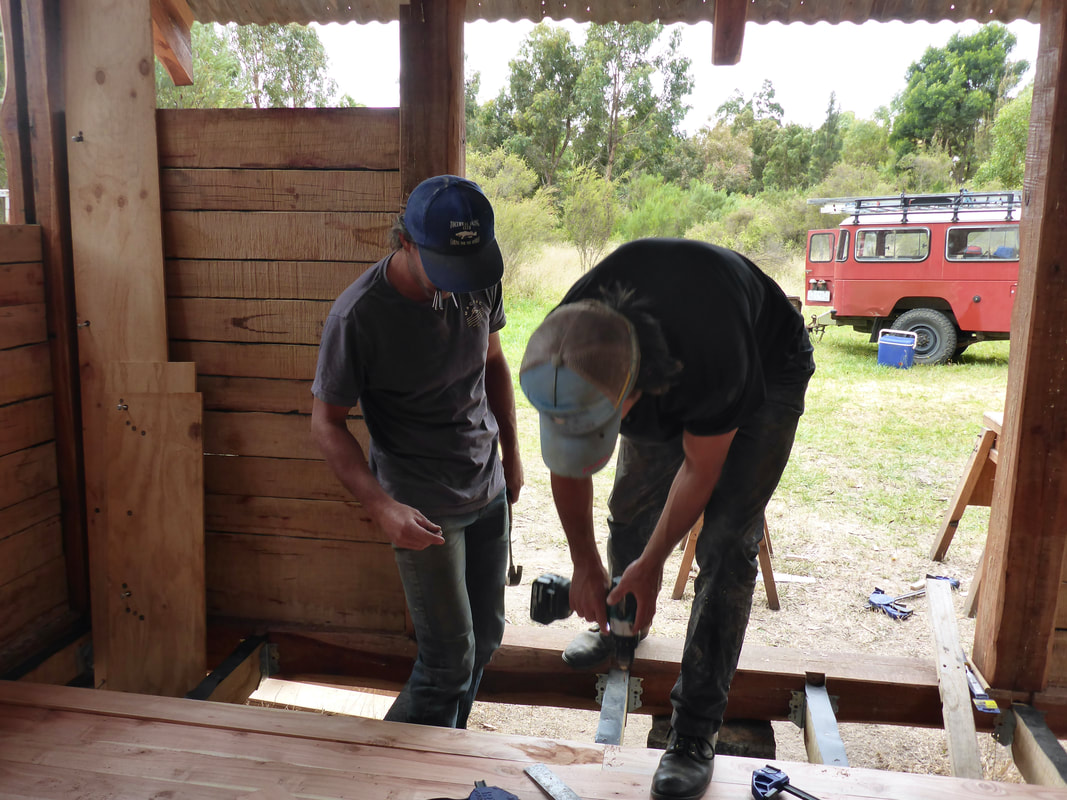
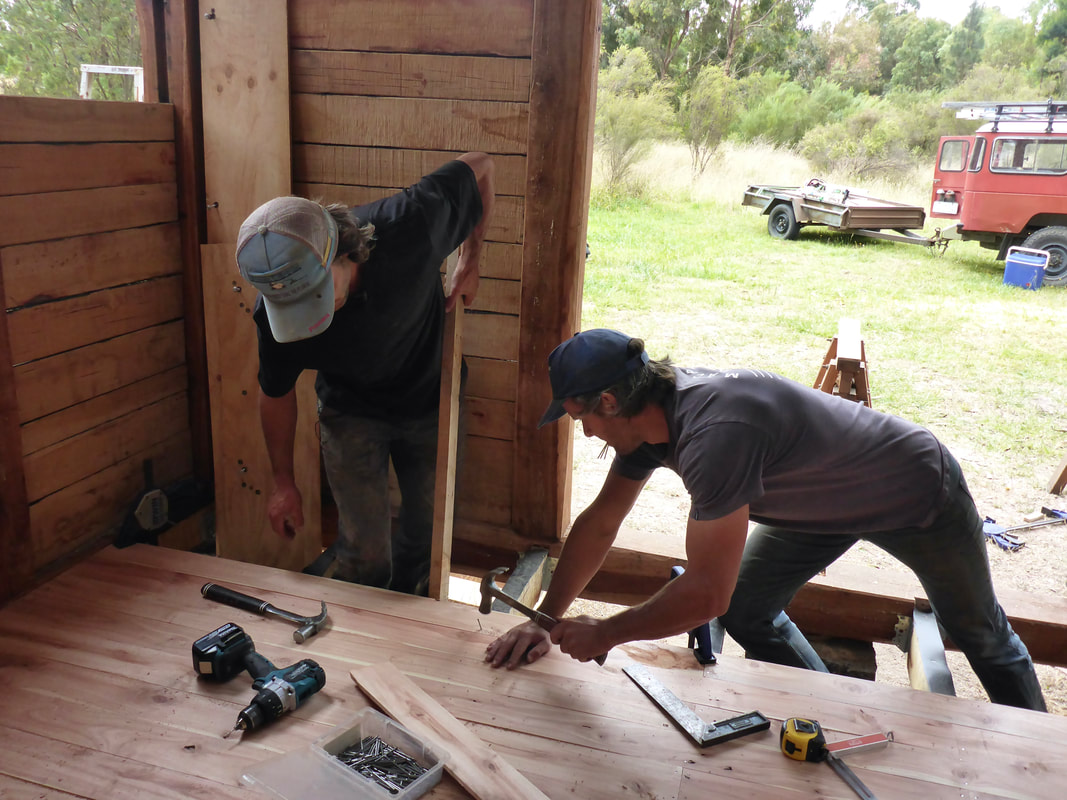
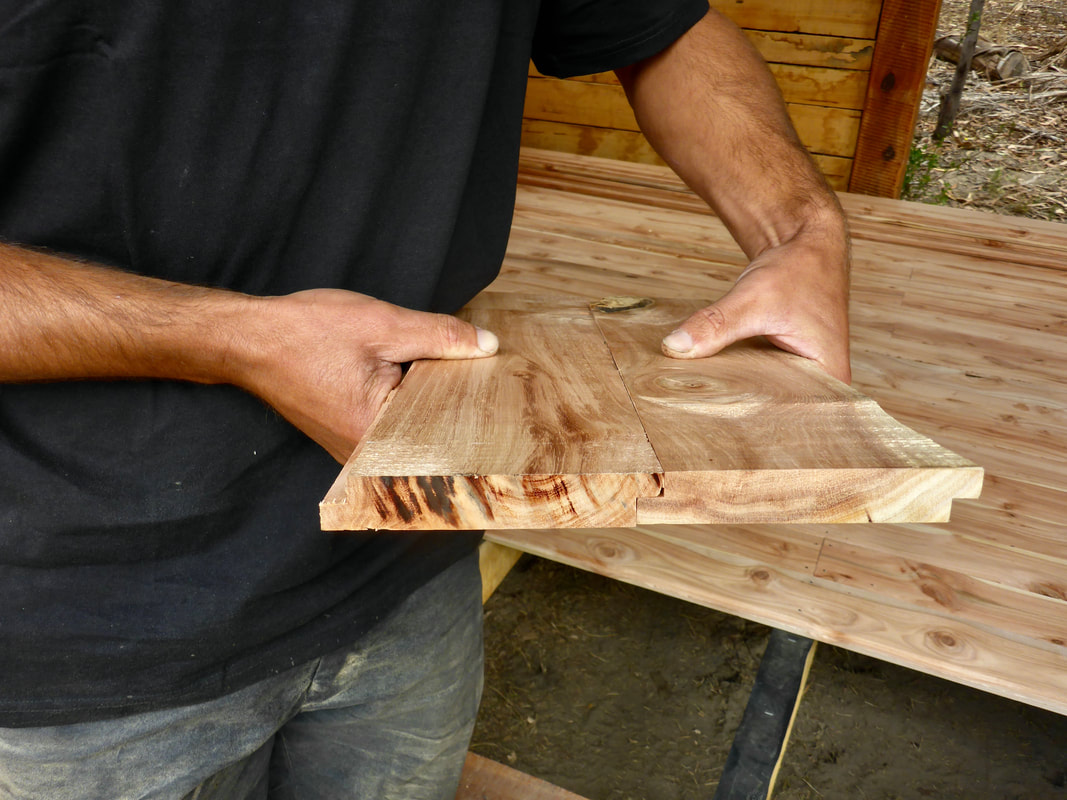
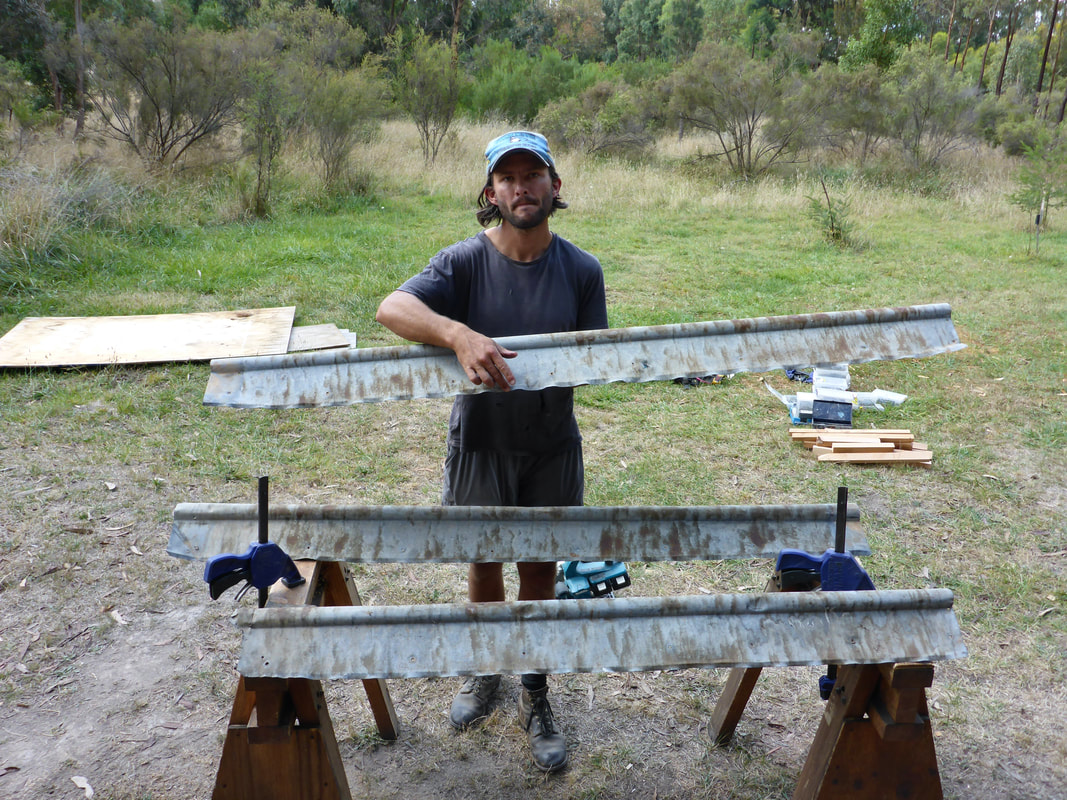
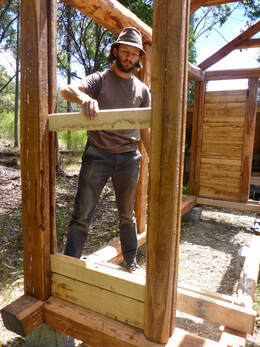
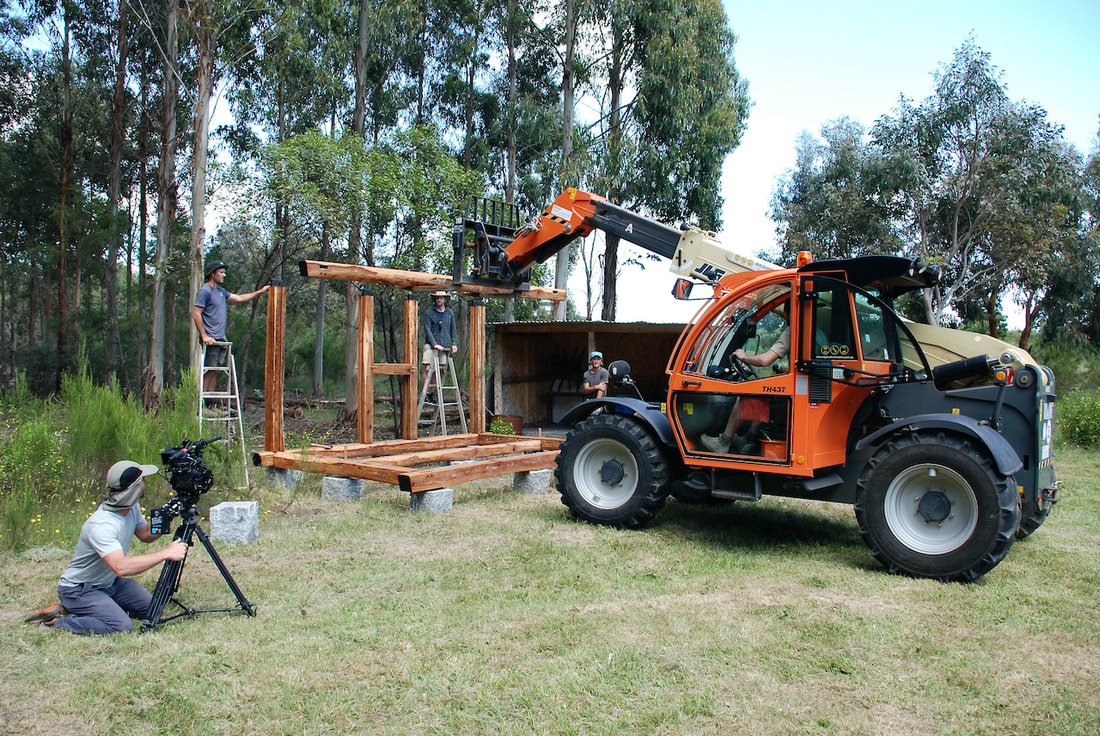
The traditional board and batten barn-style doors are made strong and stable by holding them together with Z braces. Such bracing allows the use of thinner one inch black wattle boards, compared with the minimum two inch boards required for a solid door. Ease of access and aesthetics determined the installation of double doors. They’re hung with two and a half inch rollers on a steel rail. Another space and weight saver, and when they roll back, the view north across the clearing opens wide to a pleasing prospect. Also traditional in style, the four pane casement window has a black wattle frame within a messmate case and sill. Small panes make sense in spaces prone to damage by flying birds and falling branches. Brad nailed beading holds the glass panes in place, and it’s simple to lever off when a pane does need replacing. Brass butt hinges at the top allow the window to open up and out. Given it’s stronger than pine, the black wattle frame can be fined down to 32mm dimensions. When combined with the small panes, the whole has an elegant feel to it. The messmate case is similarly 32mm in dimension, with a thicker sturdy sill that slopes 15 degrees from inside to out, which takes moisture away. The doors, window and floor all received four coats of pure tung oil mixed 50/50 with white spirits for the first coat, then 60/40 for those following. Natural oils need a drying agent. While these are present in most modern oils you purchase, so are other additives. Tung oil resists water better than any other pure oil finish and does not darken noticeably with age. It is claimed to be less susceptible to mould than linseed oil. “If you want to be environmentally safe,” said Lachie, “stick to unprocessed plant-based products and add in the drying agent yourself, or use thin enough to allow for maximum penetration into the wood.” Simply apply by brush and rub off any excess after half an hour. Lachie did break his rule and apply one extra (processed) protective coat to the double doors. He argued apologetically: “I want to hold the red-orange lustre of the black wattle longer. I’ve applied a final coat of Osmo UV Clear to add an extra layer, slowing down the harsh northern aspect greying off the doors. “The can label claims that the product is ‘environmentally safe.’” For all nine Steps, visit – https://www.biorichplantations.com/blog/category/21c-drop-slab-hut To combat the bouncing roos and the nibbling wallabies, we've purchased extra long flexible fibreglass poles and guards. They're the invention of Rowan Reid. The poles can absorb the bouncing and the high guards prevent the wallabies from nibbling.
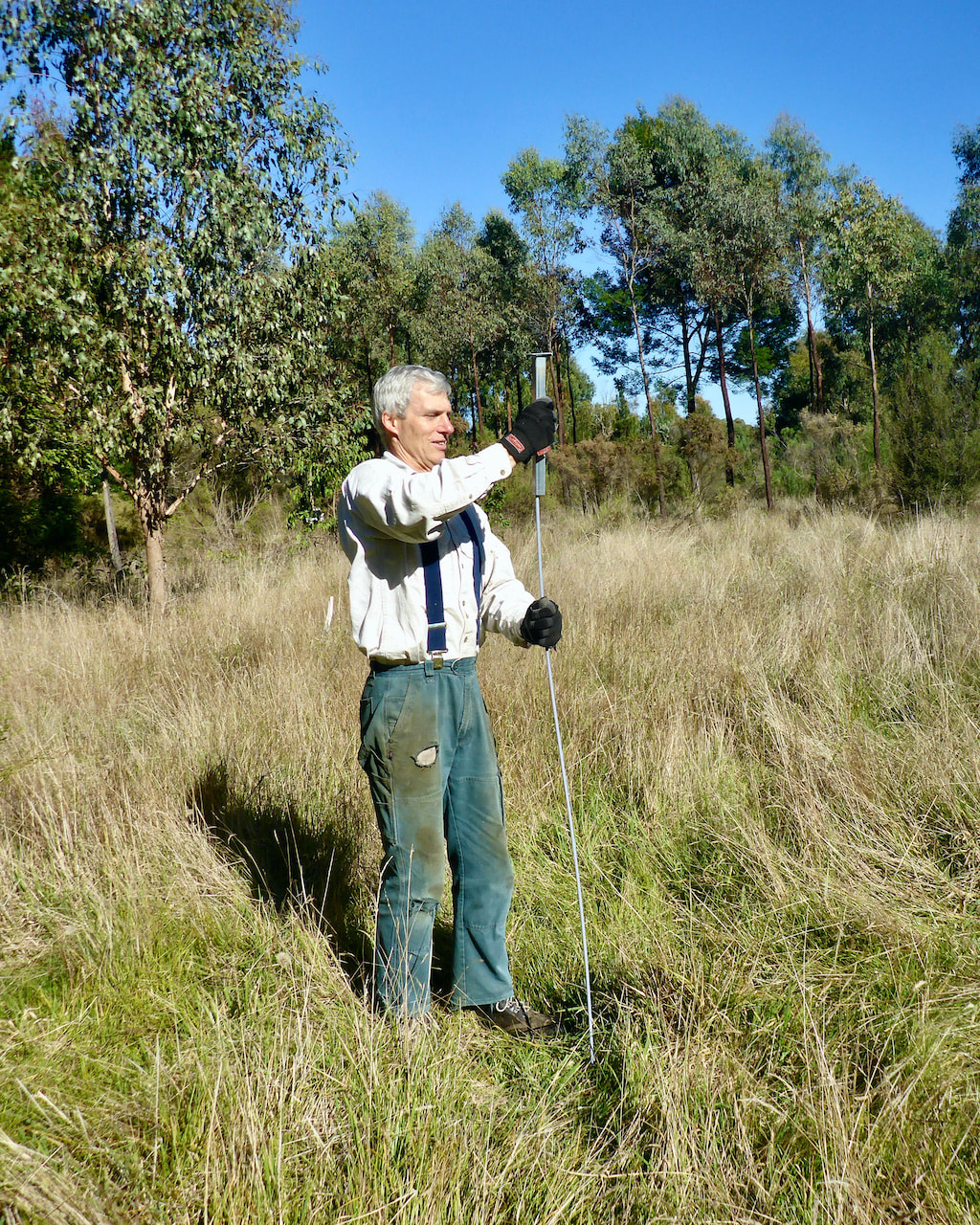
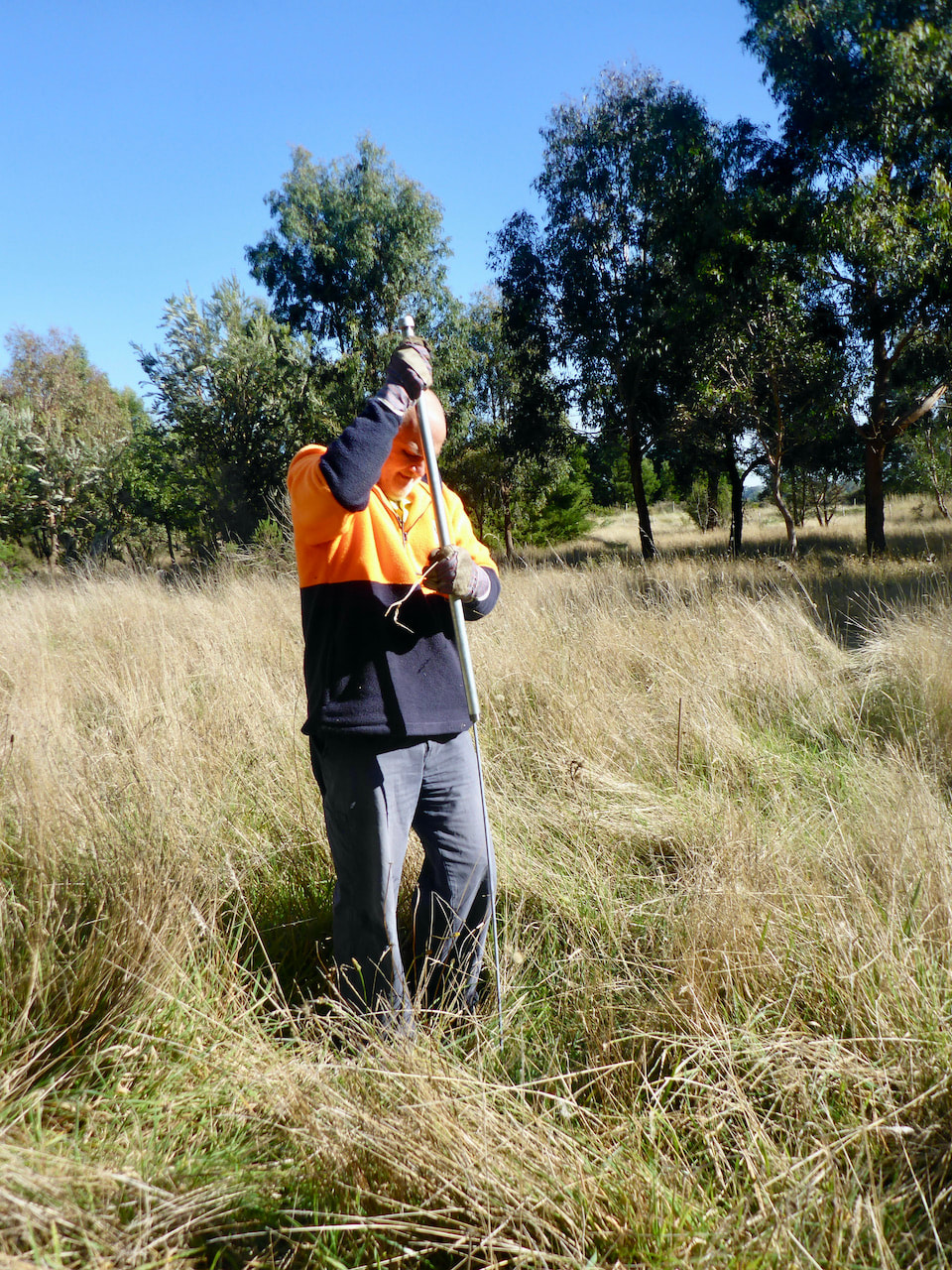
Pictured are Campbell and Gary banging the poles in place, then Gary sprayed to get rid of the thick grass mat. In spring, we'll spray once more with a knockdown glyphosate and plant out 40 black wattles, 20 messmate and 20 silver banksias. We're experimenting with using half the black wattles as a nurse crop for the messmate. Campbell has had great success with black wattle on one south-facing site. So much so that we're using it in the flooring of the drop slab hut – visit step-5-a-shining-red-black-wattle-has-an-ill-deserved-reputation.html |
Categories
All
|
Proudly powered by Weebly